
Medical Coding Services: Why Accuracy Is the Foundation of Healthcare Revenue in 2026

Every claim a healthcare practice submits starts with a code. Before a payer ever sees a claim, a clinical encounter has to be translated into the specific ICD-10 and CPT codes that describe what was diagnosed and what was done — and that translation is where a surprising amount of a practice’s revenue quietly gets lost. A single wrong digit, an unsupported modifier, or a missed secondary diagnosis can be the difference between a claim paid in full and one that bounces back as a denial. That’s exactly why professional medical coding services have become such a central part of how healthcare practices protect their revenue.
This guide explains what medical coding services actually involve, the real financial impact of coding errors, the most common mistakes that drive denials, and what to look for in a coding partner.
What Do Medical Coding Services Include?
Medical coding services cover the process of translating clinical documentation — diagnoses, procedures, services rendered — into standardized codes using the ICD-10-CM and CPT (or HCPCS) code sets. Certified coders review the provider’s documentation, assign the appropriate codes, apply any required modifiers, and check the resulting claim against payer-specific rules before it’s submitted.
This isn’t a mechanical lookup task. Coding requires understanding clinical documentation well enough to capture everything that was actually done and supported by the record — no more, no less — while keeping pace with regular code set updates and payer-specific requirements that shift from year to year.
The Real Financial Impact of Coding Errors
The cost of inaccurate coding is larger than most practices assume. According to the Healthcare Financial Management Association (HFMA), coding and documentation errors cost hospitals and health systems an estimated 1% to 5% of net patient revenue every year — a range that, for a mid-sized practice, can mean hundreds of thousands of dollars in revenue that was earned but never collected. Making the problem worse, HFMA also reports that 65% of denied claims are never reworked or appealed at all, meaning that revenue isn’t delayed — it’s permanently lost.
The cost of simply fixing a coding-related denial adds up on its own. Reworking a single denied claim costs a practice roughly $118 or more on average, once staff time and resubmission costs are factored in — a cost that applies whether or not the claim is ultimately paid. Multiply that across hundreds or thousands of monthly claims, and the case for getting coding right the first time becomes a straightforward financial argument, not just a compliance one.
Common Medical Coding Errors That Drive Denials
Most coding-related denials trace back to a handful of recurring mistakes:
- Upcoding or undercoding. Assigning a code that doesn’t match the documented level of service — in either direction — creates both compliance risk and lost or at-risk revenue.
- Missing or incorrect modifiers. Modifier errors, particularly around Modifier 25, are among the most common reasons claims are flagged or denied.
- Unbundling. Billing separately for procedures that should be billed together under a single comprehensive code.
- Insufficient documentation support. A code that isn’t fully backed by the clinical note is one of the most common triggers for both denials and audit risk.
- Outdated code sets. ICD-10 and CPT codes are updated annually; continuing to use a retired or revised code is an easy, avoidable denial.
- Specialty mismatch. Generalist coders without specialty-specific training are more likely to miss the nuances that specialty documentation requires.
Coding Accuracy Is Also a Compliance Issue
Coding errors aren’t just a revenue problem — they carry real compliance exposure. Upcoding, whether intentional or the result of careless documentation review, can trigger False Claims Act penalties in the range of $11,000 to $23,000 per false claim, plus treble damages in serious cases, according to HFMA-reported figures. That risk runs in both directions: undercoding to stay cautious can suppress legitimate revenue just as reliably as upcoding invites an audit. Reliable medical coding services treat accuracy and compliance as the same problem, not two separate concerns — a code should be exactly what the documentation supports, no more and no less, every time.
In-House Coding vs. Outsourced Medical Coding Services
Keeping coding in-house gives a practice direct oversight, but certified coders are in high demand, and most practices don’t have the claim volume to justify a large in-house coding department covering every specialty nuance. Losing even one experienced coder can create a backlog that takes weeks to clear, during which claims either go out uncoded or get coded by staff without the right specialty background.
Outsourced medical coding services — a form of medical billing outsourcing focused specifically on coding — address that gap directly: a practice gains access to a full bench of certified coders with cross-specialty experience, without carrying the overhead of recruiting, training, and retaining that expertise internally. A good provider integrates directly with the EMR/EHR system a practice already uses, so coding fits into the existing clinical workflow rather than creating a separate, disconnected step.
What to Look for in a Medical Coding Services Provider
Not every coding provider delivers the same level of accuracy. Before choosing a partner, it’s worth asking:
- What is your first-pass claims acceptance rate? This is the clearest single indicator of coding accuracy.
- What specialty experience does your coding team have? Coding requirements vary meaningfully across specialties, and generalist experience isn’t a substitute.
- How do you stay current with annual code set updates? ICD-10 and CPT changes every year, and outdated coding is an easy, preventable source of denials.
- How do you handle documentation gaps? A good coding partner flags insufficient documentation back to the provider rather than guessing or over-coding to compensate.
- Are coders certified, and how is their work reviewed? Ongoing quality review matters as much as initial certification.
- How does coding connect to the rest of the revenue cycle? Coding in isolation from claims submission and denial management creates gaps; the best providers manage it as one continuous process.
Pre-Bill Review: Catching Errors Before They Become Denials
One of the highest-leverage steps a coding team can take happens before a claim is ever submitted. Pre-bill review — a systematic check of high-risk or high-dollar claims against the supporting documentation before they go out — catches a meaningful share of coding misassignments that would otherwise turn into denials or, worse, into underpayments that go unnoticed for months. Industry estimates suggest this kind of review catches somewhere between 15% and 25% of potential misassignments before submission, which is a significant chunk of the denials that never have to happen in the first place.
This matters most on complex, high-dollar claims — surgical cases, multi-diagnosis encounters, anything with a secondary condition that affects reimbursement — where a single missed detail can shift payment by thousands of dollars. A coding partner that builds pre-bill review into its workflow as standard practice, rather than an optional add-on, is catching errors at the cheapest possible point to fix them: before submission, not after a denial arrives and the claim has to be reworked from scratch.
How Coding Connects to the Rest of the Revenue Cycle
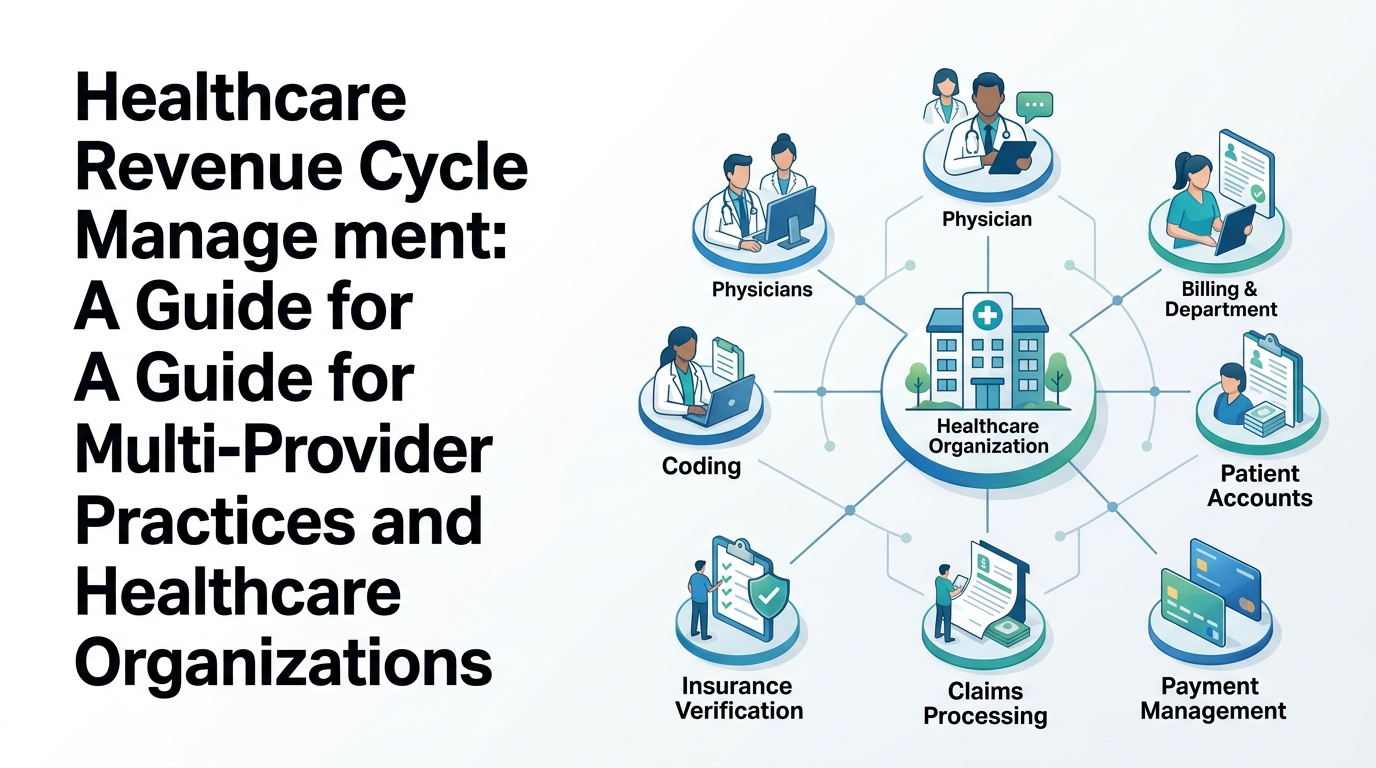
Coding doesn’t operate in isolation, even though it’s tempting to treat it as a discrete task that happens once and is done. A code that’s accurate on paper can still contribute to a denial if eligibility wasn’t verified beforehand, or if the claim submission process introduces a formatting error downstream. The practices that see the best results tend to be the ones where coding, claims submission, and denial management are handled as one connected process — coded correctly, submitted cleanly, and followed up on actively if something still goes wrong — rather than split across different vendors or disconnected internal teams with no shared visibility into where a claim actually stands.
Why Healthcare Providers Choose Diamond Medical Billing for Medical Coding Services
Diamond Medical Billing (DMB), a division of the Diamond Medical Network, is a medical billing company that provides certified medical coding services as part of its complete healthcare revenue cycle management offering, applying accurate ICD-10 and CPT coding across specialties as part of a connected billing process rather than a standalone task. DMB’s coding accuracy is reflected in the standards its team is held to:
- 99.5% claims acceptance rate from first submission
- 65% success rate recovering underpaid and rejected claims
- 100% real-time reporting, so practices can see coding and claims performance as it happens
- 100% compatibility with all EMR/EHR systems
- Complete revenue cycle management, with coding handled as part of one continuous process rather than a disconnected vendor relationship
These standards are backed by DMB’s core values: uncompromising integrity in every claim, radical transparency in reporting, and a partnership-driven approach that treats coding accuracy as a direct extension of a practice’s own financial health.
Frequently Asked Questions
What’s the difference between ICD-10 and CPT codes?
ICD-10 codes describe diagnoses — the condition being treated. CPT codes (and HCPCS codes for certain supplies and services) describe the procedures and services performed. A claim typically requires both, matched correctly to each other, to the insurance verification completed before the visit, and to the supporting documentation.
How much revenue do coding errors actually cost a practice?
Industry data from HFMA puts the cost of coding and documentation errors at 1% to 5% of net patient revenue annually for hospitals and health systems — a range that scales down proportionally for smaller practices but still represents meaningful, avoidable loss.
Do medical coding services include compliance and audit protection?
A comprehensive provider should build compliance into the coding process itself — certified coders, documentation review, and audit-ready coding practices — rather than treating compliance as a separate, after-the-fact concern.
Can outsourced medical coding services work with a practice’s existing EMR/EHR?
Yes, when the provider is built for it. Diamond Medical Billing, for example, is 100% compatible with all EMR/EHR systems, so coding integrates into a practice’s existing workflow.
How often do code sets change, and how does a coding partner keep up?
ICD-10 and CPT code sets are updated annually, with additional quarterly updates in some cases. A reliable coding partner builds ongoing training and code-set review into its process rather than updating reactively after a denial reveals the gap.
Does coding accuracy affect how quickly a practice gets paid, not just whether it gets paid?
Yes — a clean, accurately coded claim typically moves through a payer’s system faster than one that gets flagged for manual review, so accuracy affects both the size and the speed of reimbursement.
The Bottom Line
Coding sits at the very start of the revenue cycle, which means a coding error doesn’t just risk one claim — it can quietly suppress revenue across every claim coded the same way until the mistake is caught. With HFMA estimating that coding and documentation errors cost 1% to 5% of net patient revenue annually, and the majority of denied claims never reworked at all, the case for accurate, specialty-aware medical coding services isn’t abstract — it shows up directly on a practice’s bottom line. Diamond Medical Billing was built around exactly that standard: certified coders, real-time reporting, and coding treated as inseparable from the rest of the revenue cycle.
Whether coding stays in-house or moves to a dedicated outside team, the standard worth holding it to is the same: every code should be accurate, defensible, and submitted the first time without needing a second look. Ready to see what accurate medical coding services could mean for your practice’s revenue? Request a consultation with Diamond Medical Billing and get a clear picture of where coding may be costing you.